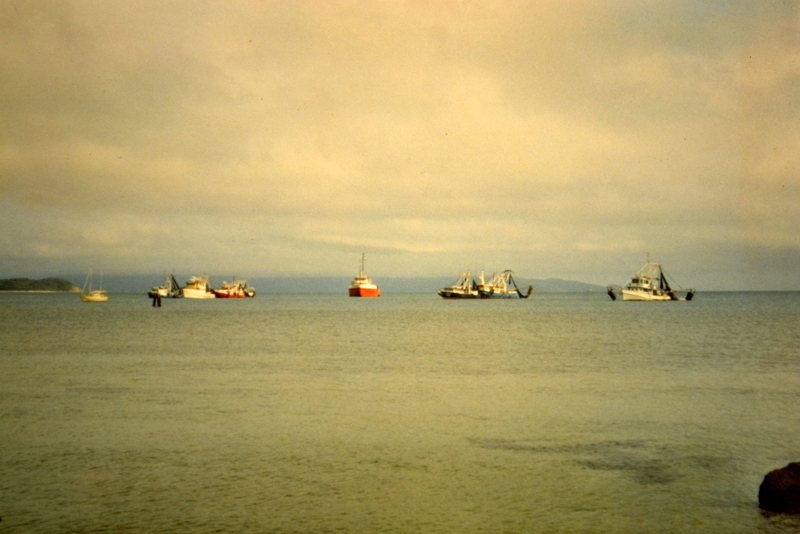
SC: What were the big times for the prawn boats? What years were they?
JT: Oh from the 70’s through to 87
SH: later even because I got here in 86
SC: OK, so it was a couple of years after that?
SH: at least
SC: 89, 88? ish?
SH: I think in the early 90s people started to chuck it in because of the politics
SC: this is just really rough at the moment to get an idea
SH: then I think by 94, um, there was only us and Steph left
JT: no, no there were a few people around then
SH: lease ran out in 94
JT: yeah, lease ran out in 94
SC: so 94, say was when the heyday, if you like of …
SH: pretty well over by then
JT: the prawn boats were getting mucked about by then
SH: they started getting knocked about then, yeah
SC: what the Cray boats or the prawn boats, so what else, what other fishing was there then, mostly prawns?
JT: there were slugs
SC: Oh yeah, that was bêche-de-mer?
SH: mackerel fishing, trout fishing, crocus shell, shark
SC: Were they a long time before or were they still up and running up until those days? Up to 94?
JT: no they were in, going back a few years, mid 80s. I suppose they stopped.
SH: when did they stop… Round then they started offering …
SC: packages?
JT: they started knocking prawn boats and before that they started pounding on the crocus ship boats too. Held them back to just a couple. And, um, slug boats. Slug boats were a big thing in the 80s and then they realised that slugs were slow-growing. So they cut back the licences.
SC: yeah.
SC: and most of the sort of, hippies, if you like, they left with the prawn boats, when did they mostly get chucked out of Chili.
JT: then pretty well.
SC: yeah, same time.
SH: the whole politics of the North changed, so it really discouraged a lot of people.
JT: It was no longer free and easy – started bringing in laws in you know.
SH: trouble is they were different laws.
JT: yeah like Billy Mitchell used to say “in the old days you’d see one car pull up and 30 people would fall out, now you got 30 cars for one person”.
SC: Billy Mitchell, he’s your?
SH: no, son-in-law.
SC: is he still around?
JT: yeah.
SH: He’s over the farm, you really should talk to him.
JT: He took over Wattle Hills from a bloke called a Owen Honary (check spelling)
SC: Owen Honary?
JT: Did you know the hippie history, or how we come to be here and what happened. That side?
SC: not at the moment – I will be. At the moment I’m trying to get an overall timeline, but then what I want to do is …
SH: well, these places, its directly related ‘cos of Idlewild Ranch.
SC: where you there?
SH: was acquired by the company of people which Billy was one of the originals
JT: representative
SC: yeah right.
SH: shareholders of these companies that acquired this place, Wattle Hills and Pascoe River farm
JT: our little company had a goldmine, we had a farm over at the Pascoe.
SH: we all own 1% of each other.
SH: so no one could go swoosh (sell each other out).
JT: you could go and sit on the goldmine for a week or two if you wanted to, go up to the farm, whack in a few veggies.
SC: yes.
SH: that’s what our shares bought us, and you decided you wanted to live and just took it from there.
JT: pretty good set up.
SC: because that sort of set up just can’t happen now can it like, just now
SH: I don’t know.
SC: even Wattle Hills – you still got lots more laws and stuff to do.
JT: lots more laws these days.
SH: no you still had council by-laws and shit.
JT: lot more sophisticated.
SH: and they’ve changed dramatically too.
SC: yeah.
JT: it is what Wattles are doing, but they’ve just …
SC: yeah, because you buy shares in the whole company that owns the land, and then your share buys you X acres.
JT: yes, you have an entitlement to X amount of acres.
SC: yeah.
JT: entitled to use that as you wish and the rest of it, remains yours
SC: yeah.
JT: and Wattle Hills, this is where Wattle Hills is different, most people over there have got their shit together enough to be able to do things. Like plant out plantations for mahogany and stuff like that.
SC: yeah right.
JT: that’s a future income. Now what the what they are doing is harvesting mahogany and stuff like that and they using that money to save what to do what do they call it
SH: rural occupancy, it’s their little town, with their roads and everything.
JT: they have maintain their own roads.
SC: and the airstrip the same?
JT: yeah.
SC: yeah, so that’s why they were all helping to do that – ah okay.
SC: yeah – have you got the way of contacting Billy?
SH: his phone is not working.
JT: I know a fair bit, Dougie and Barbie’s history, their involvement, how they got here et cetera.
SC: yeah because I was thinking of doing one, like what Ewen says it is you would do these themes – and then you connect things up with your various themes, and still and we still talk with everyone, but I thought some of the eccentric characters would be one of one themes and of course Barbara – the Queen of that.

SH: she fits that category – our mother there.
JT: she was the Queen of the what would you call it?
SC: Sandfly Heaven someone said.
JT: Of them footprints.
SC: yeah well Cate, Cate’s actually found a bloke who’s got them now and there’s a video on the web somewhere that she took at night (or someone took) up here of one of her animals. He’s got an article on Barbara (here)
JT: yeah.
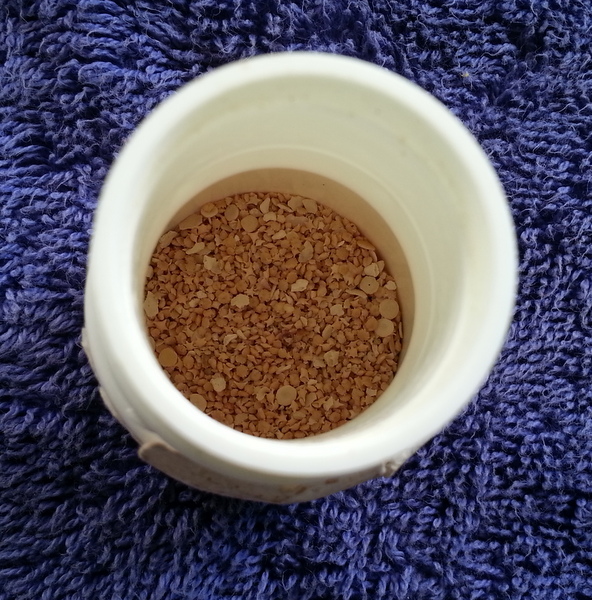
SC: and she’s got photos of all those plaster casts so, she’s got shitloads of stuff, this bloke who’s got, I forget his name now, but is got a lot of that sort of stuff. We’ve got, these yachties came past, and we were talking about this, this is last year and they said they came up here, you know, 20 to 30 years ago. They were old (I’d to better stop saying that) a bit older than me, maybe a couple of years older than me, but anyway they, um, they have a little, um little jar of this sand stuff that she had.
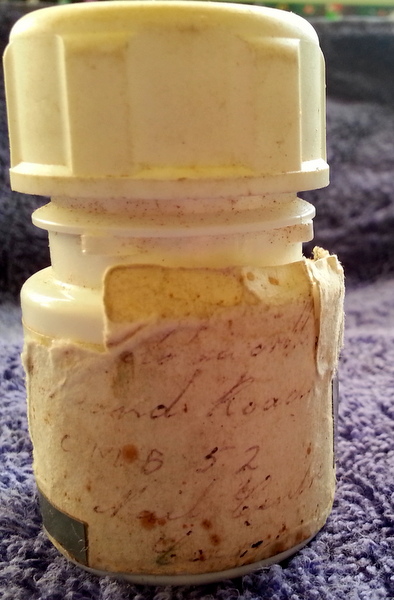
SH: oh star sand.
JT: yeah star sand.
SC: yeah, they said “it’s on the yacht somewhere” because they’d been in the yacht for 20 or 30 years and they came back the next day and gave it to us, so we still, we’ve got that.
SH: unreal.
SH: yeah. So I’ll try and blow up the sand photo because they are tiny
SH: yeah I don’t think they were gotten locally she got that star sand from somewhere else
JT: down near Cooktown.
SH: Newell Beach?
JT: Newell Beach.
SC: yeah. I heard from someone else, yeah that, still up to the early 80s, someone wandered round here, and they had a, kept a handgun on their waist. Like a handgun, pistol and a holster. And he used to walk up and down the Portland roads jetty.
SH: that would be the guy, off the barge, because he had guns.
JT: by yeah, old Kenny Underwood – might have been him.
SC: oh yeah, I thought that was – I mean just walking down the street with a pistol on your hip.
SH: he was a skipper on the Shell 5 – the dumb barge.
JT: yeah, was anchored out there.
SC: was that where the, that was like the supermarket that stayed here all the time?
SH: if you paid the price – the old Sara Lee because she could go and buy Sara Lee cakes.
SC: what was it called, Sara Lee?
SH: Sarah Lee, yes.
SC: What was the real name of that?
SC: Shell 5 barge, run by Frank market.
JT: or Matty Locke, no Frank Market had the Jardine.
SC: Matty Locke?
JT: yeah – he still owns the “Port Smithfield”. Dale’s place up behind us, Kenny Underwood, he was a skipper and he used to have six-guns.
SC: Oh yeah.
SH: He had chased people.
SC: so that was Matty or Frank?
SH: no, a guy called Kenny Underwood – skipper of of the Shell 5.
JT: He built Black Poles where Dale used to live. And he dubbed all of us, because, we lived under wood because he was up there and we were underneath him, we were the “cockroaches”.
SH: and Anita Pope, the postman’s wife, got all these T-shirt designed and printed down at Kuranda called Portland Roads – cockroach country, with a big print of a cockroach.
SC: who was that, Anita Pope. Was that Geoff’s mother?
SH: yeah, mother, and she used to sell them to the tourists. I think a fellow named Red Dog printed them out – he’s quite an artist. I think he’s still alive.
JT: they went well and then they started doing others with prawns and trout.
SC: so what were the other big things that happened? Like, oh when did they blow up the jetty?
JT: Gregor would be able to tell you that.
SC: all right, I’ll ask, I’ll check with Gregor. And didn’t Chips do the last bit of blowing up of the pylons.
JT: probably, he was a bit of a powder monkey.
SH: before me – gone when I got here.
SC: I’ll check up with Gregor on that one.
JT: do you know about Barbara’s history, her family and welcome to the area.
SC: not really, but what I want, I want to do a whole sort of session on her.
SH: I remember the day when this lease was taken up, now those leases will take up the same time.
SC: so what I’d like to do is to come back and just talk about Barbara and Billy and whoever else.
SH: she was our mother, if you signed her visitors book, you became one of her children.
JT: old Doug, there was a quiet fella.
SH: you didn’t want to cross him. If he didn’t like you, he’d get his whip out. Great big bullwhip and accurate as, mate.
JT: I’ve never seen a cat go so flat in me life, Barbie always had cats. We were sitting on the step out here, this bird was sitting on the tree, and the cat’s hunting the bird, then the whip and he flicked the whip just above the cat, that cat went so flat.
SC: so, what were the other big things that happened as in, recent history in the past 40 to 50 years.
JT: you mean like prawn trawlers and that – well they kicked everyone off Idlewild around the same time. Um, apart from that, there is the aboriginal side of the story. They been having their dramas.
SC: no, well I’ll go to talk to Dotty and Lucy.
JT: you know about Owen Honorary (sp?) And ? … about their little private war they had there.
SC: no, no.
JT: Owen Honorary
SH: guy who owned Wattle Hills before…
JT: they called him Owey, and this bloke called Bram, got the station next door to Bramwell. They were having a range war over something ..
SH: over the cattle probably.
JT: pulled their 22’s out and started shooting at each other, chased each other on horseback, from over at Wattle, all away across the Cape over to Weipa, back across to Bramwell, back across over the other side again. They eventually crawled into the police station at Coen, one guy had 17 bullet holes in him and the other guy had about 15. They stuck them side-by-side in the same hospital ward
SC: yeah, ha ha.
SH: and in the hospital ward, there was them two guys, Donny Fife who owned Pascoe River Farms, who some somehow caught a fuel bottle alight when he was starting the gennie (I think gennie was going)…
SC: shit.
SH: he kicked the bottle and it stuck to his leg, and Peter (Alby’s dad) who was working on scrubby Creek mine are he… So here he was stuck between these two guys.
JT: there was Scrubby Creek mines, Northern King and Packers Creek mine
SC: we could have all the mines – just have a mining section
JT: yeah, Gordon’s Creek, Northern Queen, Northern King and Northern Queen . . . two shafts. Oh, there’s a mineshaft on Rocky Island. That was the tungsten.
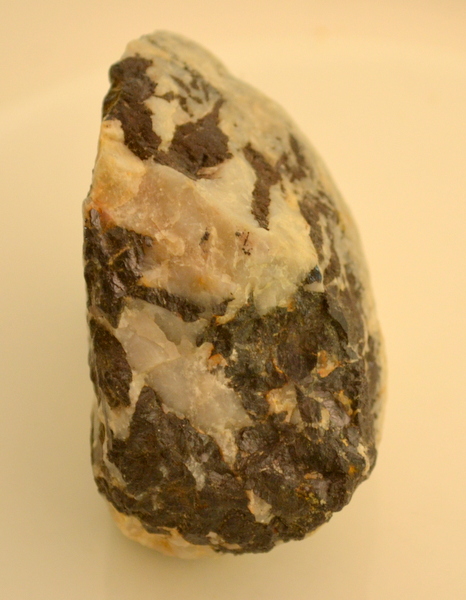
SH: was it tungsten or wolfram?
JT: same thing
SC: didn’t Butch Pope have a shark oil place over there?
JT: yeah – few crocs chewing on the carcasses.
SH: a few big ones sun themselves over there.