SC: So what we’re looking at is the oral history for the past 30 or 40 years. But that’s only a rough guideline. Like, I interviewed Lucy, I’ve gone back further with her because she’s got memory of her father and mother coming up here in the lugger – the Mary something….that was ages ago, but basically I’m just trying to get people who are still living….their living memories of everything around here. I haven’t got that much stuff on Barbara at the moment or the history of the jetty. I’ve got a fair bit on the hippies down at Chili and how they came up and big Stephanie, the Moon markets that were here. I’m just trying to get a broad overview of stuff, but I thought you’d probably have more knowledge of the jetty.
JH: Not really.
SC: No. Okay, I’ve still got to talk to Gregor about that.
JH: Barbara. They used to live out down there.
SC: Did they, okay. And Doug.
JH: Yeah, they were living down there.
SC: I thought they lived where Jimbo’s living now.
JH: Yeah, that was after that. When they pulled the jetty down. I’m pretty sure they lived out then, yeah they did. And the fisherman, I wish I could think of his name, it will come to me soon, but he used to live at the end of the jetty too.

SC: Okay, he was a fisherman.
JH: Yeah and he was the guy that actually started the plantation at Cape Weymouth with all the oil palms.
SC: What was that?
JH: That was a government thing…
SC: When was that?
JH: I think it was 1976 or 1977.
SC: And that was the oil palms.
JH: Yeah. They’re the ones that were at Port Douglas now. The very same ones.
SC: Was that plantation just to do that or was it….
JH: They never grew here. So they dug them all up and they sent them to Cape Trib and they grew them up at Cape Trib and then Skase bought them all for his drive into …
SC: That was Mirage or something, he had that big resort.
JH: But they were actually here. That’s where that one came from in front of Greg. The one in front of National Parks. There’s still a couple out there. There’s two on this side and one on the other side. I wish I could remember his name.
SC: I think I’ve got somewhere someone’s name who used to live out there. Yeah.
JH: Gregor might know.
SC: So did they have a job out there or they just happened to live there…there was a fishing….at the end of the jetty.
JH: Fisherman. Mackerel fishing. That’s where Barb got the star sand from because they used to fish around the Cape. I think he had a TI missus or so I’ve heard.
SC: And so after the jetty was pulled down, they moved into Jimbo’s place where it is now.
JH: I think they might have went to Packer’s first. They lived out at Packer’s but I can’t say for sure whether they were at Packer’s before they went to the end of the jetty. I think it was the other way round. I think they were at Packer’s first.
SC: Because the four places that are there at Packer’s now which is Neil’s, Chip’s…
JH: No, this is the end of here at the bridge. The little bridge is there.
SC: There was a house there, was it?
JH: Just a shed. That was an old gold mine. If you go there now, you’ll see the old stumps and everything’s still there. There was all this explosives still there. Barb wrote to whoever and they come up and blew it up You go past the two bridges and then at the top of the hill there’s a road down to the left. If you go down there you’ll see the old stumps. There’s still a couple of old water tanks where they were washing the gold.
SC: So it’s just past two bridges.
JH: Left hand side, top of the rise.
SC: Okay, I could probably take a few photos there because if there’s still stuff visible.
JH: The water tanks are still there. Where the old house was, you just got to walk back upstream a bit and you can see there’s three different levels, three different tanks. But the main shaft is across the other side of the road. So I’m not sure how they got the….
SC: Because they were quite a few different gold mines round here wasn’t there.
JH: Oh that’s the only one here. There’s old Scrubby Creek.
SC: Oh Scrubby Creek. Yeah, that was the other one I’d heard of and King and Queen – how far away are they?
JH: They’re at Gordon’s.
SC: Yeah, I meant the whole sort of area. So there’s only two in this local area here.
JH: Well there was only one here. Scrubby Creek’s halfway into Lockhart, top of the hill there, the other side of the bitumen. I worked there.
SC: You did, at Scrubby Creek?
JH: Three days I think, then the place closed down. And they never actually found any gold there.
SC: Didn’t they?
JH: I think it was setup.
SC: Someone said it was salted. It’s speculation….
JH: You don’t know for sure.
SC: Yeah, someone told me stuff. Someone else did say that that was a suggestion that that might have happened.
JH: It was a little bit of gold there, because I had a book here somewhere, but Irene Taylor from Coen, her and her husband came over and spent three months there and they said it just wasn’t quite enough to make it worthwhile. Do you know Irene Taylor Bridge?
SC: Yeah. So there were a few big families at Coen, wasn’t there?
JH: Yeah, they was the Taylor’s, the Shepherds.
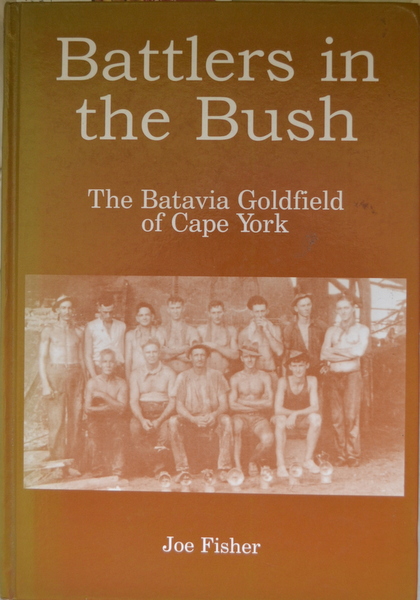
SC: Battlers of the Bush, was that the book you were thinking of. Yeah, I’ve got that.
JH: That’s the book but it says in that book that Irene and her husband come over and spent three months at Scrubby Creek. And then Jim Quinn somehow got hold of the lease.
SC: Jim who?
JH: Quinn.
SC: I haven’t heard of him before, who was he?
JH: He was an old rogue. He’s still alive too. He owns the house going into Coen on the bend there, you know the old ruins there. Just the other side of the camping area on the river when you’re coming in. I actually knew him from Brisbane. I didn’t know him in Brisbane, but I figured out who he was, we used to paint his car. He just lived one block away from where I worked in Brisbane.
SC: Small world.
JH: Yeah, it was. I didn’t recognise him, but he told me how we used to paint his car all the time and fix it up. It was probably all bent. I never had anything to do with him, it was just that that’s what I heard from other people.
SC: So when you did get up here?
JH: ’83.
SC: And then you were fishing for a fair bit. Did you start fishing straight away or…?
JH: Worked for the Newmont mines. For two years, but that’s only for two or three months of a year.
SC: Yeah, because I heard they’d always be work at the beginning of the year some part of the year or something like that when they had to spend that money. So that’s three or four years or something like that?
JH: Two years. My wife Sheree worked for them a little fair while after that, another couple of years I think. We went fishing after that.
SC: And did Shane come up with you then?
JH: He came up with us just for the holiday and then he went back.
SC: When did he come back up?
JH: Late ’80s. Yeah, he actually came up here before us.
SC: Did he?
JH: Yeah. He just did a three month trip round the whole Cape and everywhere. We were going to do the same thing, but Shane said ‘don’t bother about anywhere else, go to Chili Beach. You spend your three months there, you’ll have more fun there…’
SC: It still is one of the most beautiful spots, isn’t it?
JH: It is and a lot of people who lived there….I think we were there nearly four months. It was great. I think we got here in June.
SC: Of ’83.
JH: I’m not sure, it’s ’83 or ’84. I think it’s ’83, because I worked for Newmont for a while and then I bought a new ’84 Landcruiser so it must have been ’83.
SC: So a couple of years for Newmont, what did you do after that?
JH: Fishing.
SC: And had you been a fisherman before?
JH: No. Well in those days you were allowed to sell $6000 worth of fish, anyone could per year. So I could sell….$6000 in them days was a lot of money too. So I could sell $6000, Sheree, my wife could sell $6000, Shane could sell $6000. We just fished for ourselves out of a little dinghy. We just had a little freezer and waited on the mother ship. The mother ship on the next trip up would bring you the proper cash money.
SC: Real money. But that would have been a reasonable living I think then.
JH: It was, it was more money than I’d ever made in my life for day. Some days you could make $600 and then you might not make anything for the next week. Some days were unbelievable and it was easy, something that you enjoyed doing.
SC: And that was on the Shell 5, was it?
JH: The Shell 5 was here, yeah.
SC: Is that where you sold them? Or a different barge came up and filled that with fuel and grog didn’t it?
JH: Jardine it was called.
SC: Jardine.
JH: Frank Market had it.
SC: Yeah, I’ve heard his name before.
JH: And there was another barge called the Tropical Trader and the Jardine was only a small one. A lot more trawlers started coming up here. They bought a bigger one called the Barrameda….
SC: Called the what?
JH: Barrameda. It was just a really big old trawler. I think it was 100 foot.
SC: Is that one word, Barrameda?
JH: I don’t know what that means.
SC: So that was when the mackerel started, no, when the prawns started.
JH: Yeah, it became a lot more. The Jardine was….originally the mother ship was only a tiny little boat. So this other guy started up and he was a real crook. So they were just trying to push him out. So they thought they’d get a bigger boat.
SC: So he was the bloke who owned the Tropical Trader.
JH: The Tropical Trader was Brett Devine. He was going bad and nearly going broke. Everyone unloaded him and he allegedly stole five cartons of prawns off everyone to pay his bills, and that ended up being tens of thousands of dollars.
SC: There was some bloke who used to siphon off a litre of petrol out of every drum.
JH: No, that was the guy on the Shell 5.
SC: Oh is that Frank Market.
JH: Kenny Underwood.
SC: Oh Kenny Underwood.
JH: Under current we used to call him.
SC: Is he still alive?
JH: No, he owned this place up here. Dale’s place, Black Poles. He died of a brain tumour long ago. He was probably only about 55 or 60.
SC: And he’s the one that got those cockroach T-shirts….
JH: Kenny Cockroach, that’s what other people would call him. We used to call him Kenny Underpants, under current, under everything. He was a bit suss too. That’s how he found out that a 44 was four inches down.
SC: So how long did you do the fishing for? Because up to a couple of years ago you were just doing the bait fishing.
JH: Yeah, well in 1986….’87, I bought my own boat, me and a partner. I had that, fished that for 16 years I think, maybe 18 years.
SC: Nice looking boat, comfy and in the shade.
JH: Still going too. I only owned a quarter of it. The guy that owned the other three quarters has still got it.
SC: So how many feet is that one?
JH: 26 foot.
SC: What was that one called, did you call it anything?
JH: Portlands.
SC: Okay. Would you mind if I scanned some of those photos?
JH: No.
SC: Only give me ones that you don’t mind going up on a website or something like that. Getting old photos is bloody brilliant.
JH: You haven’t got any old photos of all the other markets and stuff. I can get some of them. I used to love that.
SC: Well if you don’t mind I’ll scan them. I’ll get a much better quality copy then.
JH: Yeah, that’s that little gallery we made. Just a couple of 44s and some farmers. We cut our own track.
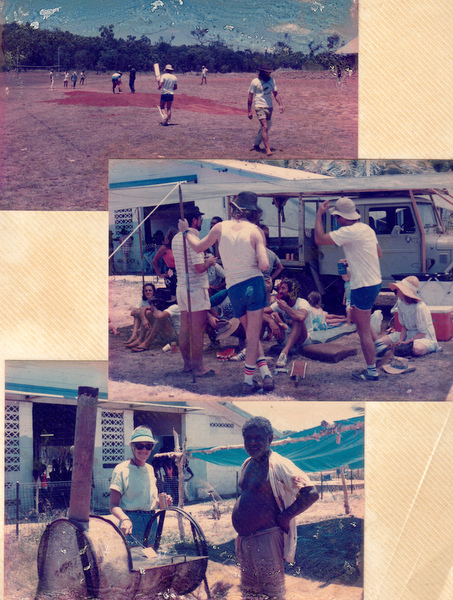
JH: There were cricket matches in at Lockhart. That’s one of the markets.
SC: So that would be a market.
JH: Yeah, that’s next to the toilets, where the toilets are now. There used to be an old shed, Gregor built it.
SC: Okay, is that where the community hall is now or around the Town House?
JH: No, where the toilets are. Down the front.
SC: Okay, for some reason I thought they were up here.
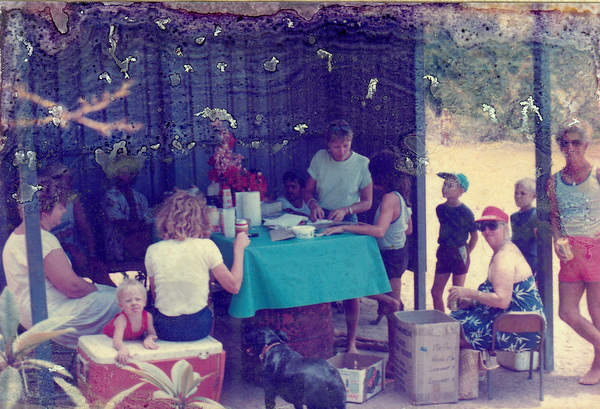
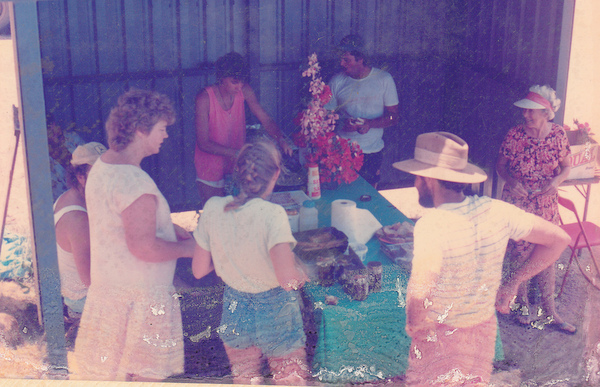
JH: This is another market, see that’s the old toilet. There it is, that’s Gregor’s shed – he had an old yacht in there. The toilets are up here now. That was just a little shed and those are markets. Old Popey and all the old hippies from the Pascoe, they’re all dead. Look at this fella, he had a trailer and it broke down half way here. Full of generators and fridges and everything on his bonnet.
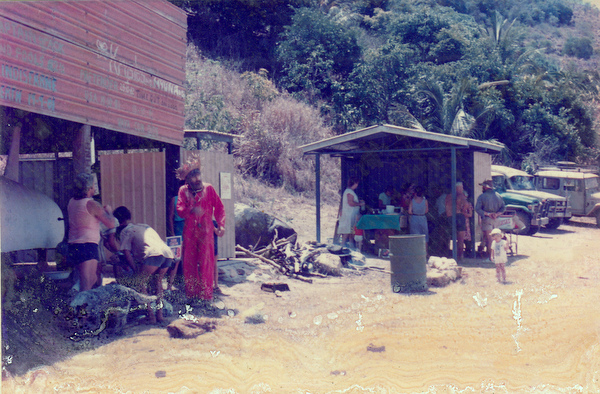
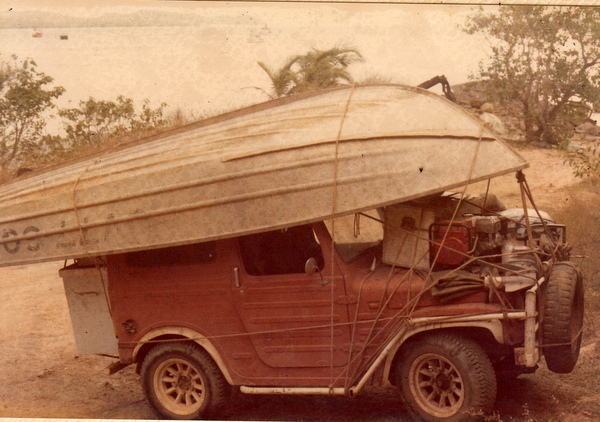
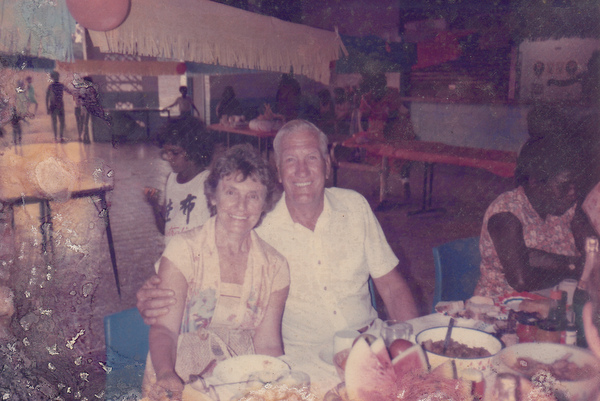
SC: Is that a Suzuki or a Daihatsu?
JH: No, Suzuki and I’m pretty sure a two stroke one too I think.
SC: Yeah, I used to have one of those two stroke ones. They were a good little vehicle.
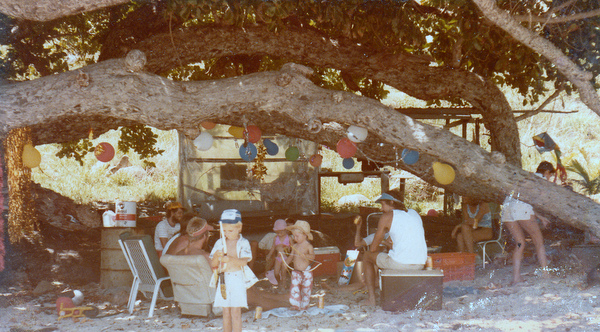
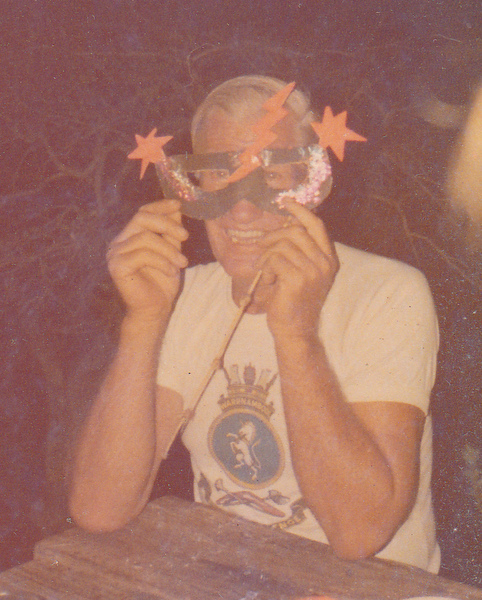
JH: Other fancy dress parties here. Coral trout just stacked up, I think there’s 300 there.
SC: What are those great big fish or…?
JH: Maori Wrasse.
SC: Oh Maori Wrasse, but it’s illegal to take them now, isn’t it?
JH: Yeah.
SC: Were they any good to eat?
JH: Beautiful.
JH: That’s Ball Tree. A mate used to live there, that’s his camp. Top spot.
JH: There’s Geoff Pope.
SC: That’s a market too I suppose.
JH: Yeah, they stand on the same spot, that’s old Pam. I’m pretty sure it’s her. He’s the coppa. Robbo, he was a ratbag.
SC: I’ve heard about him from Stephanie.
JH: That’s his missus. Yeah, he was a real hard guy. More cricket matches at Lockhart.
SC: Whose is that place?
JH: Gregor’s. Here’s Dotty’s wedding. Pity they weren’t a bit better. There was another wedding on Shell 5. That’s on the old barge. More markets. Old Popey blind drunk. Look at him here. Old Johnny Dopefreak, ever heard of him.
SC: Yeah, he changed his name to Dopefreak, didn’t he?
JH: Yeah, that’s a classic Johnny Dopefreak pose. That was on Chili Beach. Across at Chili Beach. Billy Mitchell. That’s all Steph’s daughters. There’s Steph. That’s Joe. That’s here. Can’t even see them now. They live right on the top of the mountain.
SC: Yeah, that ant bed floor was supposed to be good stuff, wasn’t it?
JH: Yeah, it’s just that you’ve got to…
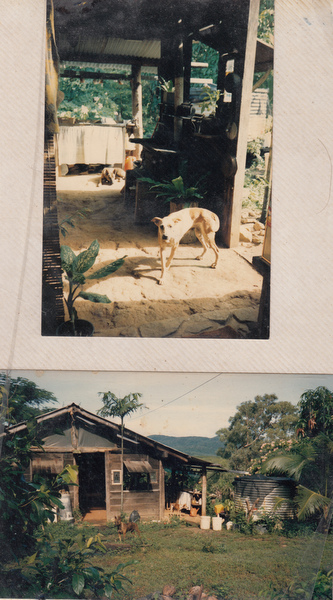
SC: Brush it?
JH: Well they actually mixed it up in a concrete mixer and poured it. You’re supposed to pound it semi-dry. Take whatever you want out of it. Few good ones there. I thought there was more of the old markets some of the one’s down here. Pity that. Don’t last long your photos these days in this weather.
SC: ’87…so you built your own boat in ’87 and that was in partnership with three other blokes.
JH: One bloke.
SC: I thought you said four.
JH: Yeah, he had three quarters and I had a quarter.
SC: I get it. You had a quarter and he had three quarters. And who is the other bloke, is he still around or is he…?
JH: Yeah, Ross Fenn.
SC: Where have I heard his name. Is he still around?
JH: He lives in Cairns.
SC: And so was that after this time when all three of you were doing it or was this sort of….you could do that as an amateur, couldn’t you? That $6000 one.
JH: Yeah, No, this was afterwards. That had all stopped.
SC: Yeah, they changed the laws.
JH: We had to buy a license, a proper license.
SC: So what did you fish for then, was that all sorts of stuff or just one thing?
JH: Anything, yeah, but Coral Trout was what I started doing, but then it got…it’s really hard. I didn’t really know how to catch a mackerel that good. It took me a while to figure that out. As soon as I’d figured that out, I don’t bother about the Coral Trout any more, I just go with mackerel because it’s easy. A quarter of the labour.
SC: That’s because they’re so big, isn’t it?
JH: You don’t drop the anchor. Pulling the anchor up 15 times a day, you don’t, you just troll around all day. You only catch 30 fish instead of 200 and you’re only up till 9 o’clock filleting instead of two in the morning.
SC: Yeah, you get good at filleting, good and sick of it I suppose.
JH: Yeah, how fast you are, depended on how much sleep you get.
SC: And when did you stop doing that, did you…?
JH: It was 2006, eight or nine years ago. Maybe 2005. Just got a bit sick of it.
SC: Yeah, that’s a fair while you were doing it for.
JH: Yeah and away from home a lot too.
SC: So when you went out, you’d stay overnight or you’d just work days?
JH: No, I did four or five days. It would take you that to fill the thing up. Just fill it up and then come home. Some times you’d do it in two or three days. Sometimes it might take six days. Yeah, you just fill them up. The main thing that made me stop was this wasn’t a real good boat. I had to spend a lot of time on it, it was really noisy. Very noisy and you do four days and you come off the thing and your ears will be ringing for the next four days. It was either reinvest and get a bigger, quieter boat or give it away altogether. At the time I was getting sick it. Being an aluminium boat.
SC: You hear every bit of noise, don’t you? Every wave slapping.
JH: Yeah and the motor. Mackerel fishing the motor is going all day. You don’t stop, so you don’t realise how bad it is until you get off it and your ears are still ringing. I was glad I stopped.
SC: And was it usually just the two of you out on the boat?
JH: In the end there was just me.
JH: First of all Shane, oh I took Sheree out kicking and screaming for the first three years. She used to get sea sick, she didn’t really like it that much. But we had to do it.
SC: So the other bloke, had you bought him at this stage?
JH: No it was always a partnership.
SC: But he didn’t go out.
JH: No. He had six trawlers. Six coral trawlers.
SC: So he was an investor in that.
JH: He used to come up…he had a young boy who used to come up every school holidays and he’d go out fishing with him. He just liked fishing, but not prawn fishing.
SC: So Sheree went out with you for the first three years.
JH: Two or three years, yeah. And Shane for a couple of years and then various other deckies. In the end it was just me.
SC: How was that, could you still handle it?
JH: Yeah. It was just like deckies never really made me money, I made them money. You don’t, doing mackerel, you don’t catch any more because you’ve got an extra person. All it does is halve the work.
SC: But no extra money really.
JH: No extra money. So you make them money. They save you a bit of labour but that’s all. Once I was confident enough that I didn’t really need anyone….because it’s pretty dangerous too.
SC: You ended up being quite a good fisherman, didn’t you?
JH: Yeah, I made good money. And only worked 120, 130 days a year. First couple of years I did it hard, went out every day. But once you got good at it, you could still make your 80 grand doing 120 days.
SC: And when did you buy this place? Do you own this place or is it you and Shane or you and Sheree?
JH: Me and Sheree. I can’t remember now, probably 12 years now.
SC: So that would have been when you were in the fishing and you had the money coming in. Because it wouldn’t have been very expensive in those days, would it? Even for those prices.
JH: Well the lease got surrendered.
SC: Okay.
JH: Another person owned it and he surrendered the lease back to Lands Department and we wrote them a letter saying how we’d been fishing here for 14 years and they gave us the lease straight away, 20 year lease. Within one year we applied for freehold and got it straight off. We had to give the owner $20,000 for the house and then it was $35,000 for freehold. It was cheap.
SC: So have you added much to this … this extension here?
JH: Had all the water tanks and everything. Until we had tenure on the place we didn’t do much with it, because we didn’t know whether we were going to keep the house or not.
SC: It’s actually a really well designed place. It’s always cool. I mean Alan’s place is not bad, but nothing compared with this.
JH: And everything is dead square. When they put the roof and everything on, it’s just perfect. The floor is dead level, everything’s….
SC: It’s all really well done.
JH: And there’s no fastenings, I might have showed you, but there’s no fastenings. It’s just all sitting there. It sits there, all just locks itself in. So he knew what he was doing.
SC: Yeah, a lot of skill.
JH: Just all locked in by itself. A lot of work getting….these are big solid poles. Best spot here I reckon. No neighbours.
SC: I really like where we are, because I can look at to sea. Beautiful.
JH: Well I spent 20 years on the sea, I don’t want to see the sea any more.
SC: Yeah, it’s a bit different when you’ve worked on it for a long time.
SC: So you said you’d never had water here, you only had rain water initially? You’ve got no bore.
JH: No, still just rain water. This is the lowest I’ve ever been. When it gets a bit low, you can start conserving, it should never run out.
SC: So you bought this 12 years ago?
JH: Roughly.
SC: So when did you stop fishing? Stopped 2006?
JH: 2005, 2006 sometime around there.
SC: And when did you start that bait fishing that you were doing when I….
JH: Straight up from then. I used to do a bit before I got rid of the boat. I was giving my partner…because my pay was 55% of what I caught plus a quarter of what was left. So my other partner was getting 38-40% for doing nothing. At the time I bought my boat license for only three grand. I squeezed him out and then I got it all for myself. So I did it for the last year before I took the bog boat. That’s when I thought I don’t really want to go mackerel fishing any more, but I can do this for two months of the year. It’s too hard.
SC: What’s that, a couple of months a year?
JH: In winter time.
SC: And that got you enough to give you enough supplies.
JH: Sheree was working at Lockhart, she always had a job in there. She pretty well ran the place. She did the bank, the pays, Post Office, whoever didn’t show up. There was always someone that didn’t show up.
SC: So how long did the markets go, how many years roughly do you reckon? They were the full moon markets weren’t they? Was that them?
JH: Yeah.
SC: Were they at Chili or the same thing?
JH: No….oh yeah, we did have a couple at Chili. Not many, mainly across here.
SC: It was mainly across here, but some down the….
JH: Started off down the front, they were big. You see the trawlers never worked full moon, so there’d be 20 trawlers anchored out here.
SC: So it would be worth it.
JH: We used to take turns at running the beer. $1500 you would take.
SC: That wouldn’t happen these days either, would it? That’s a nice way of doing it, people take turns.
JH: Yo double your money.
SC: Yeah, but these days one person would do it all the time.
JH: We made $750 a day. It was a lot of mucking around. You had to go and buy the beer, go out with a trawler, get all the ice made on a trawler and cart it all in and get it all cold and sit there all day selling it. But still $750.
SC: I just like the idea that everyone took turns at it. Nice way of doing it, like a real community thing, isn’t it?
JH: And a certain amount was donated to the fire brigade….no it wasn’t, what we used to do is we used to raffle bottles of rum and that would go to the fire brigade. Whoever won the rum – they’d donate it straight back to the fire brigade and five minutes later they’d raffle it again. I remember one time they made about $700 out of one bottle of rum. They had food stalls. One time they had, Big Steph…she had a spirit store down there. That just turned into a whole thing, everyone just went crazy. I actually ran up here fearing for my life. There was fishermen and Zac…you would have heard of Zac, he’s running around in the the car trying to run everyone over. It was out of control. We do have straight nips of spirits, that’s not real bright. I think that was the last one we had.
SC: Yeah, one of those pictures of the hippies on Chili, a lot of them had really nice gardens and houses and things like that.
JH: That was great.
SC: And you said you lived there for a while on Chili or…?
JH: Four months. Right down the end.
SC: Down the thingo creek?
JH: Near the creek, yeah. Just this side of the rocks. We’d cut a track in and cleared a big area. Because it was really windy. So we cut a track and got out of the wind, cleared a big area and set up our tent. We knew we were going to stay for three or four months. So we all got pretty comfy.
SC: And you just fished there and camped there?
JH: Yeah.
SC: What did you do for water there, do it out of the….?
JH: Out of the well.
SC: Oh that’s that well.
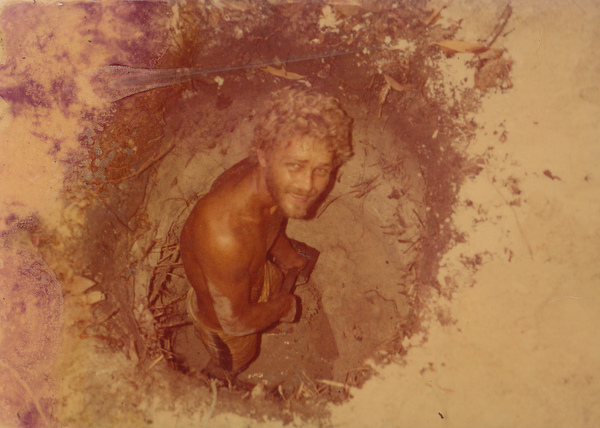
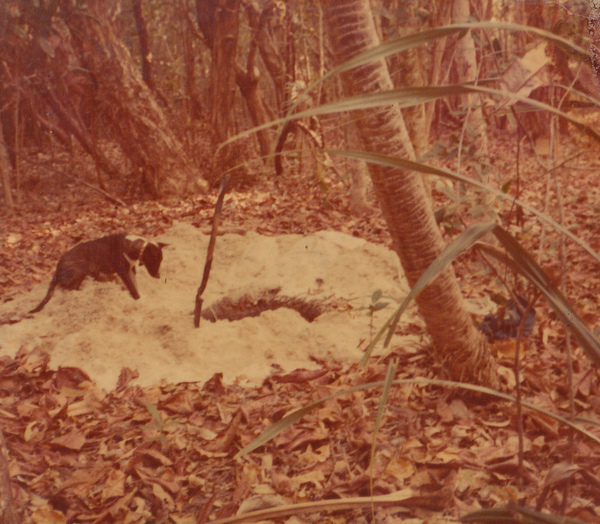
JH: Because we used to go and get our water of the hippies. They used to get their shits you know; ‘dig your own fucken well’. We only went down two 44s. You just pick a low lying area, where there’s some Pandanas Palms. 100m off the beach. Wasn’t the best water, but it was water. Drinkable, it was. At the start we used to mix cordial with it to drink it. It was good for washing and that.
SC: Was it a bit salty or just brackish?
JH: No, just brackish. Well not brackish, just a little bit of tannin or whatever. Then after that….the more you used it the cleaner it got. Because the bottom 44, we just got the gun and just shot all holes in it. If you empty it out. So I suppose after you get rid of all the shit around it it is going to become clean, filtered through the sand. And we used to sell crayfish and fish to Scrubby Creek.
SC: To the mines?
JH: Yeah, swap it for fuel which was good. Because they had no shortage of fuel and fuel was a real drama in them days, there was no….
SC: Yeah, where would the nearest one be; Archer river or…?
JH: No, Archer river wasn’t there. Was Archer river there then? It wasn’t. I don’t think so. You had to get everything in by barge and 44s. We ordered a 44 of diesel up. We went to the store manager and waited a month and it was there all the time.
SC: Was he trying to rip you off or he just didn’t realise?
JH: No, he just couldn’t be bothered, he was a real arsehole this guy. He was there to serve black fellows and he didn’t like dealing with white fellows for some reason. He was a white fellow, he had a Murri missus. He just….you’d go and fill your gas bottle up and he’d say I’ll be out there in a minute and he’d keep you waiting there for two or three hours. You’d go back in; yeah I’ll be out there in a minute.
SC: It was a bit of a power trip.
JH: Yeah, I think it was. You know Martha in the hospital?
SC: Which one’s Martha?
JH: She used to be at the desk with colourful earrings and……He was married to her sister, she’s got a twin sister.
SC: Yeah. What was his name?
JH: Dougy….I can’t remember his last name. Something like Wilson. We waited a month and it was there the whole time.
SC: So were you around when the jetty got demolished or…..?
JH: I’m pretty sure that was 1976.
SC: Yeah, I’ll see Gregor for that.
JH: I don’t think he was here either. He might have come just after. All the square timbers here come off the jetty.
SC: All those big ones?
JH: Yeah, all the square ones.
SC: It would be good timber too.
JH: Jarrah I think they used to make it out of.